
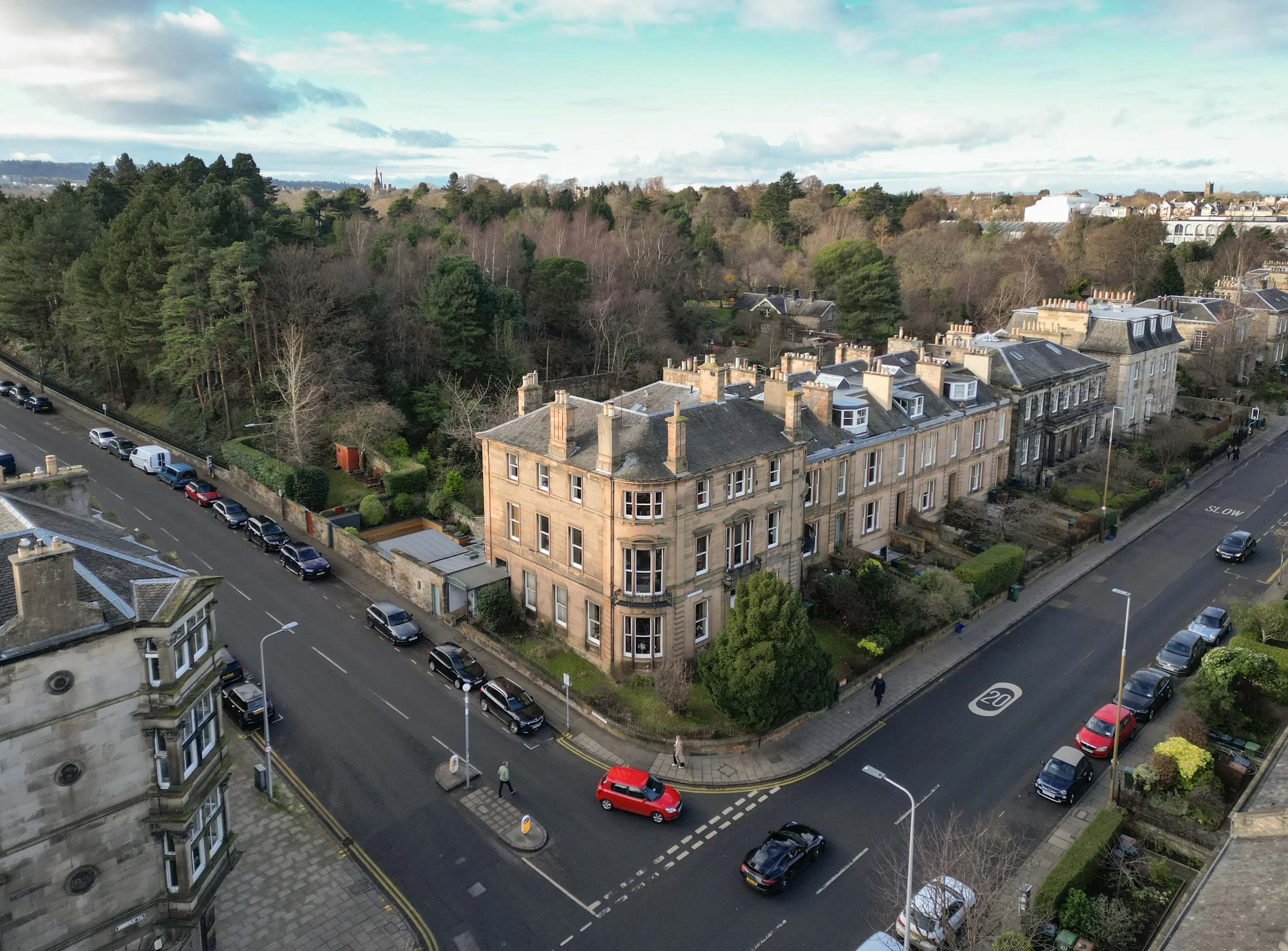
The Royal Botanic Garden Edinburgh's historic Palm Houses reopened on 2 October 2026, following a five-year restoration. They are two A-Listed Victorian glasshouses that have stood in the Garden for nearly 200 years. If you have not been since they closed, they are worth the journey. If you are visiting Edinburgh and want somewhere to make the trip feel special, The Garden Rooms Edinburgh is the closest accommodation by some distance.
Our garden gate is approximately two minutes on foot from the Botanics' main entrance on Inverleith Row. Many of our guests visit as part of their stay — a morning at the Palm Houses, lunch in Stockbridge, and the afternoon entirely your own. It is one of the most unhurried, genuinely restorative ways to spend a day in Edinburgh.
What are the Palm Houses?
The Palm Houses are two Victorian glasshouses at the heart of the Royal Botanic Garden Edinburgh: an octagonal glasshouse built in 1834, and a larger Victorian dome completed in 1858. Both are Category A-Listed buildings — Scotland's highest heritage designation. Together they form one of the oldest and most significant collections of glasshouse architecture in the world.
For the first time in decades, the two houses have been united as one continuous space. Specialist teams replaced all 5,750 panes of glass, repaired approximately 600 square metres of historic ironwork, and carefully conserved the sandstone structure. The work was part of the Garden's wider Edinburgh Biomes project. Throughout the restoration, the Garden's horticulturists protected and maintained hundreds of rare and scientifically important plants — many of which are threatened in the wild — which now fill the reopened houses.
What will you see inside?
The Palm Houses hold almost 600 of the more tender plant specimens from Scotland's National Botanic Living Collection. The effect on entering is immediate: soaring glass-domed roofs, lush tropical greenery, ferns, palms, and plants that could not survive a Scottish winter anywhere else in the country.
Among the highlights is the Norfolk Island tree fern (Sphaeropteris excelsa), a species whose natural habitat has drastically diminished. In the wild it can reach 20 metres high. The Mexican tree fern (Cibotium regale) is worth looking at closely — around 1,000 ladybirds have been introduced among its fronds to protect the plants from other insects. The Garden also houses some of its oldest living specimens inside the Palm Houses.
For anyone who appreciates plants, horticulture, or Victorian architecture, it is a genuinely extraordinary space. But it is also simply a beautiful, warm, green place to be — particularly welcome on a grey Edinburgh morning.
Practical information: visiting the Palm Houses
Tickets are required and time-slotted. Entry to the main Botanic Garden is free, but visiting the Palm Houses requires a separate timed ticket. Places are limited, so booking in advance is strongly recommended. Tickets are available from the Royal Botanic Garden Edinburgh ticket page.
Admission: Adults £4.95 (or £5.50 with an optional Gift Aid donation). Concession tickets for those aged 65 and over are £4.20 (£4.70 with donation). Children aged 5–15 are free. RBGE Members visit free and can book through the same page. Kew Gardens members and Gardeners' World 2-for-1 card holders are also eligible for discounted entry — check the booking page for details.
When to visit: Weekday mornings are quieter. The Palm Houses are a genuinely immersive experience and it is worth having some space to wander at your own pace. A weekday slot allows that more easily than a busy weekend afternoon.
The Front Range Glasshouses (built in 1967) remain closed to the public while restoration work continues. The Palm Houses themselves are fully open.
"For the first time in decades, the two Palm Houses are now united as one continuous space — restored, renewed and ready to welcome visitors."
Royal Botanic Garden Edinburgh
Combining the Palm Houses with the rest of the Garden
The Royal Botanic Garden Edinburgh itself is free to enter and open year-round. It is one of the finest botanic gardens in the world — 70 acres of living collections, a Chinese hillside, a rock garden, a magnificent arboretum, and herbaceous borders that are spectacular in spring and summer.
From the Garden, a short walk connects you to Inverleith Park, where there are south-facing views across Edinburgh to Arthur's Seat and the Castle. Very few visitors know this viewpoint exists; almost none of them are tourists.
After the Botanics, Stockbridge village is a 10-minute walk: independent cafés, a Sunday market, delis, and some of Edinburgh's best lunch options. Scran and Scallie on Comely Bank Avenue is one of the finest pub meals in the city. The Inverleith Row cafés are good for a coffee before or after the Garden.
Why stay at The Garden Rooms for your Botanics visit
The practical answer is simple: we are the closest accommodation to the Royal Botanic Garden Edinburgh. The entrance on Inverleith Row is approximately two minutes from our front gate. There is no other short-term rental in Edinburgh that comes close to that.
The less practical answer matters too. The Palm Houses and the Botanic Garden are places that reward an unhurried visit. You will want time to sit, to wander, to come back for a second look at something. Staying nearby means the visit is not squeezed around a commute from the city centre. You can arrive when the Gardens open, take your time, have lunch locally, and spend the afternoon at your own pace. If the weather turns, you are two minutes from a warm studio and a private garden.
The Garden Rooms is also a genuinely accessible property for guests who prefer to avoid stairs or shared common areas. There are no stairs, no shared entrance, and no other guests. Your private entrance, your private garden — at the very edge of one of the world's great botanic gardens.
Other times of year
The Botanics are worth a visit in every season. Spring is the most spectacular: cherry blossom, tulips, the herbaceous borders coming into colour, the whole Garden lifting out of winter. Summer brings full green abundance. Autumn turns the arboretum extraordinary shades of gold and copper. Winter has its own quiet beauty — and the Palm Houses offer warmth and green on the coldest days.
In November and December, the Garden also hosts Christmas at the Botanics — an evening illuminated trail that transforms the gardens after dark. If you are visiting for the Palm Houses and considering a winter trip, combining it with a Christmas at the Botanics evening is a particularly memorable combination.


